We offer complete and gentle grooming services Monday through Saturday. This includes stylish clips/trims with a soothing bath using a variety of all natural products!
Keeping your pet’s paws safe in our hands since 1986.
213 Granite Spring Road Richmond, VA 23225 | (804) 745-7173 |
www.dogsdayinn.com
Showing posts with label dogs. Show all posts
Tuesday, March 13, 2018
Our Grooming Services
We offer complete and gentle grooming services Monday through Saturday. This includes stylish clips/trims with a soothing bath using a variety of all natural products!
Tuesday, February 27, 2018
Tuesday, February 20, 2018
Doggy Daycare
We offer Doggy Daycare Monday through Saturday from 8am to 6pm. Your puppy can play with his friends all day long in one of our spacious supervised yards.
Monday, February 12, 2018
Striving for Excellence!
We are always looking for ways to improve your experience with us. Let us know how we are doing by taking our short, 2-question survey.
Friday, July 14, 2017
Doggy Daycare
We offer Doggy daycare Monday through Saturday from 8am to 6pm. Your puppy can play with his friends all day long in one of our spacious supervised yards. We have multiple fenced yards, and offer separate areas for small and large dogs. There’s plenty of trees for shade and room to run.
Tuesday, February 21, 2017
Monday, February 13, 2017
Your Valentine – Your Dog!
Your dog is the love of your life! No need to sign up for dating sites, just look down, they are right there!
They always show their affection.
They love long walks.
They will make you laugh.
They are always excited to see you!
They love to reenact classic movie moments!
They can lay out flower petals.
They shower you with kisses!
They are playful! They will run into your arms!
Happy Valentine’s Day!
Sunday, February 5, 2017
Pet Dental Health Month
February is National Pet Dental Health Month and a great time to start regularly brushing your furry friend's teeth.
Many pet stores and veterinarians' offices sell toothpastes and tooth brushes specifically for dogs and cats. A special tip from some veterinarians is that we should think of our pets' teeth similar to how we think of our own.
Just as we can't expect mouthwashes or healthy, crunchy food to remove all of the plaque from under our own gum lines, similarly there is nothing so successful in removing plaque as consistent brushing and yearly professional cleanings for cats and dogs. Choose a pet-approved toothpaste in a flavor your pet likes. Never use human toothpastes, because pets swallow toothpaste and we don't want them to ingest fluoride on a regular basis. It is in fact the brushing itself that disrupts the plaque biofilm and slows the progression of dental disease.
There are recommended toothbrushes approved by the Veterinary Oral Health Council. It's also safe to use a soft-bristled toothbrush approved by the American Dental Association, such as a toothbrush made for children.
Pet owners should aim to brush their pets' teeth every day. Rawhide chews, dog treats, water additives and other products can complement a home dental care program that centers on tooth brushing. Tooth brushing should be the mainstay of your home dental care plan."
Some pets may not be amiable to having their teeth brushed. If you are considering beginning to brush, but have not had a recent cleaning, it may be safest to start by letting your pet lick toothpaste from the toothbrush. This way, your pet develops a positive association with tooth brushing. Then, begin a regular regimen of brushing following a professional dental cleaning.
In some cases, consistent tooth brushing is not a workable option for certain pets and owners. Yearly professional cleanings are still going to help in these situations. Water additives, gels, and treats may help as well. The products most likely to help slow the progression of gum disease are those with the Veterinary Oral Health Council seal.
Monday, January 16, 2017
Thursday, January 12, 2017
Keep your Pets Safe and Warm During Cold Weather
Winters
may be getting warmer every year, but that doesn’t mean these
frigid temperatures and snow storms are going anywhere. It’s always
best to be prepared— you can stock up on rock salt, shovels, a
generator and warm clothing — but caring for your pets in the cold
is another matter.
The
Cold Outdoors
See
a dog out in the cold without proper shelter? Contact local law
enforcement. Dogs left in extreme temperatures, especially without
food and shelter, are at risk of hypothermia, frostbite or death.
Note the date, time, exact location, and type of animal involved.
Jot as many details as possible before contacting animal control or
local law enforcement with your complaint. Follow up in a few days if
the situation has not been remedied.
Paw
Protection
Daily
walks in the cold can harm your dog's paws. Keep them moisturized to
protect against salt and chemical agents. Use pet booties to
minimize contact with painful salt crystals, poisonous anti-freeze
and chemical ice melting agents. Apply a dollop of petroleum jelly to
their paw pads before going outside.
Dos
and Don'ts
Closely
shave your dogs in winter. Longer coats mean more warmth. Consider a
coat or sweater for short haired breeds. Coverage from the base of
the tail to the belly provides extra warmth.
Ditch
the Bath
If
your dog must be bathed, ask your vet for a moisturizing shampoo or
rinse recommendation. Reduce bathing frequency during cold spells.
Drying can take too long, and washing too often can deplete essential
oils and increase dry, flaky skin.
Check
Before You Rev
Outdoor,
stray and feral cats sometimes sleep under car hoods to stay warm.
But the fan belt can injure or kill a cat when the motor starts. To
avoid catastrophe – bang loudly on your hood before starting the
engine to give the cat a chance to escape.
Monday, December 12, 2016
Dog-Friendly Dates
If you’ve managed to snag a significant other who’s just as in love with dogs as you are, congratulations! But just because your time will be spent going on fun dates doesn’t mean you have to leave your precious pup home alone. There are plenty of fun activities to do with your new human companion that your dog buddy can enjoy, too. And if it doesn’t work out with the new human in your life, you can still try these out with just your dog as your date, instead. The best part is that you don’t even need to spend much to do it. Here are eight great dates that you can go on with your dog.
Have a Picnic
For the price of a homemade lunch, you can pack a picnic basket and head to the park to get out in the sunshine and enjoy a meal. It will give you a chance to talk and get to know each other in a peaceful surrounding, and your dog will appreciate the fresh air and exercise. Be sure to pack a chew toy and some treats so your pup can have something to keep him busy while you eat and chat.
Go to an Outdoor Movie Night
Lots of parks offer outdoor movie nights with big screens and projectors, and they’re usually free. Check your local park district’s calendar of events and see what activities they have planned. Chances are good that they have something going on that your dog is allowed to attend, and it’s a great way to branch out and meet new people and dog owners. Next time, maybe you can even make it a double date with some new friends.
Take a Long Walk on the Dog Beach
You can’t think of dating without the phrase “long walks on the beach” coming to mind. It’s pretty romantic to have the warm sand in your toes and the sound of waves lapping at the shore with you and your partner walking hand-in-hand. But it’s an even more joyful occasion with your pup happily running into the water and making new dog friends. Be sure to bring a ball or a toy to a dog beach near you and have some fun.
Hit up the Pet Supply Store
You’re going to need to stock up on supplies at some point, so why not make a date out of it? Your dog is probably allowed to shop with you at your local pet supply store, so bring the pup along and have a chat with your partner about the best ways to spoil your fur baby. This is a great way to test to see just how into dogs your significant other really is.
Go for a Pet Charity Walk
There are plenty of charity events for you to attend with your dog like the Strutt Your Mutt charity dog walk run by Best Friends Animal Society in cities all over the United States. Check out local charity walks near you. You and your partner can get out and get some exercise, meet fellow dog lovers, and do it all for a good cause while you’re at it. Your pup will be happy to burn some calories and say hello to some other dogs.
Eat and Drink at Dog-Friendly Bars or Restaurants
Al Fresco dining with dogs is becoming very popular with restaurants and bars that have outdoor seating options. Some places even have dog events that let your pup join you indoors. Check your local pub’s calendar or talk to someone who works there about setting up your own event. Always be sure to check with a business before bringing your dog along to see what their rules are.
Visit a Farmers Market
An outdoor farmers market is a great place to shop for produce and support local farms, and it’s fun to walk around and talk to people. You and your significant other can stock up on fruits and veggies, and your pup will be happy to get outside and go for a walk. Some vendors may even leave a bowl of cool water out as doggy re-hydration stations, but be sure to bring a water bottle just in case if you plan to stay outside for a long time.
Hit the Hiking Trails
If you live close to a hiking trail, take advantage of it and get back to nature. Your dog will be happy to sniff all the new smells, and you and your partner can enjoy exercising and taking in the beautiful scenery, and the great part is that each season of the year has new views to offer. Again, be sure to bring plenty of water so you and your pup can stay hydrated.
Wednesday, November 30, 2016
House-Training Your Puppy
Patience is key when it comes to housebreaking because every pup will pick up the process at his own pace. And unless a dog is taught where to eliminate, he'll look for any spot that's convenient and safe, which often ends up being the carpeting! Unfortunately, dogs aren't born with the moral reasoning to understand that going to the bathroom inside the house is wrong.
Since dogs innately want to keep their personal area clean, they will venture away from their own territory to use the bathroom. But many owners make the mistake of giving a puppy too much space too fast. In this case, the dog has little incentive to wait to go outside, since his personal roaming space only makes up a small portion of the home.
Get a Crate
It's best to use confinement to teach your dog that he has to wait to go to the bathroom outside the house. You can do this by purchasing a crate, so the puppy has just enough space to turn around and lie down. Another alternative, if possible, is to keep the puppy by your side at all times while clipped to a four- to six-foot leash.
Honor the 15-Minute Rule
Puppies are most likely to use the bathroom within 15 minutes of eating, drinking, playing, exercising or waking up from a nap. After any of these activities, your puppy should be given an opportunity to go to the bathroom.
A general rule of thumb for how long puppies can hold their bladders: one hour for every month of age, plus one. So if a puppy is two months old, he can wait up to three hours. However, this varies from dog to dog, and a puppy should be taken out more often than his maximum hold time. I train owners to take puppies out to the bathroom every one to two hours or after any activity that stimulates elimination.
Reward a Job Well Done
When it’s time for a bathroom break, take your puppy outside to the same proper elimination area each time. If he goes to the bathroom within five minutes, praise him and offer treats as soon as he does his business.
Don’t take your puppy immediately back to his confinement area, which can actually read as punishment to him. Instead, opt for a 10-minute block of supervised play in a bigger area before putting him back in the confined space. However, if your puppy does not eliminate outside, calmly place him back in his confinement area, wait 15 minutes and then try again outdoors.
Accidents Happen
Never punish your puppy if he has an accident in the house. This only teaches the dog to fear the idea of going to the bathroom when people are around, and he will likely still go in the house — just not when his owner is looking. Instead, if you catch your puppy in the act, you can interrupt him with an “oops,” and immediately take him to his proper elimination area outside.
Introduce Space Gradually
As your puppy stays accident-free in the confined area, you can gradually expand his space privileges by introducing him to a new room. After one week of success without accidents, open up yet another area of your home.
However, if accidents start happening, confine him back to the previous level of success. And keep to his regular schedule of bathroom breaks, rewarding for proper elimination, throughout the entire training process.
Get Out of Bed
During the night, you may need to take your puppy outside multiple times. Don’t push your puppy to hold his bladder past the limit for his age or individual ability. If accidents happen at night, it’s critical that you take him out more often — the more a dog messes in his personal space, the more comfortable he will become with lying in his filth, making housebreaking difficult.
Don't Rely on Puppy Pads or Newspapers
Although dogs can be transitioned away from them, it makes the house-training process more complicated. Dogs who are trained to go on pads as puppies, but then they're not allowed to do so as adults, only leads to confusion and accidents in the home.
Since dogs innately want to keep their personal area clean, they will venture away from their own territory to use the bathroom. But many owners make the mistake of giving a puppy too much space too fast. In this case, the dog has little incentive to wait to go outside, since his personal roaming space only makes up a small portion of the home.
Get a Crate
It's best to use confinement to teach your dog that he has to wait to go to the bathroom outside the house. You can do this by purchasing a crate, so the puppy has just enough space to turn around and lie down. Another alternative, if possible, is to keep the puppy by your side at all times while clipped to a four- to six-foot leash.
Honor the 15-Minute Rule
Puppies are most likely to use the bathroom within 15 minutes of eating, drinking, playing, exercising or waking up from a nap. After any of these activities, your puppy should be given an opportunity to go to the bathroom.
A general rule of thumb for how long puppies can hold their bladders: one hour for every month of age, plus one. So if a puppy is two months old, he can wait up to three hours. However, this varies from dog to dog, and a puppy should be taken out more often than his maximum hold time. I train owners to take puppies out to the bathroom every one to two hours or after any activity that stimulates elimination.
Reward a Job Well Done
When it’s time for a bathroom break, take your puppy outside to the same proper elimination area each time. If he goes to the bathroom within five minutes, praise him and offer treats as soon as he does his business.
Don’t take your puppy immediately back to his confinement area, which can actually read as punishment to him. Instead, opt for a 10-minute block of supervised play in a bigger area before putting him back in the confined space. However, if your puppy does not eliminate outside, calmly place him back in his confinement area, wait 15 minutes and then try again outdoors.
Accidents Happen
Never punish your puppy if he has an accident in the house. This only teaches the dog to fear the idea of going to the bathroom when people are around, and he will likely still go in the house — just not when his owner is looking. Instead, if you catch your puppy in the act, you can interrupt him with an “oops,” and immediately take him to his proper elimination area outside.
Introduce Space Gradually
As your puppy stays accident-free in the confined area, you can gradually expand his space privileges by introducing him to a new room. After one week of success without accidents, open up yet another area of your home.
However, if accidents start happening, confine him back to the previous level of success. And keep to his regular schedule of bathroom breaks, rewarding for proper elimination, throughout the entire training process.
Get Out of Bed
During the night, you may need to take your puppy outside multiple times. Don’t push your puppy to hold his bladder past the limit for his age or individual ability. If accidents happen at night, it’s critical that you take him out more often — the more a dog messes in his personal space, the more comfortable he will become with lying in his filth, making housebreaking difficult.
Don't Rely on Puppy Pads or Newspapers
Although dogs can be transitioned away from them, it makes the house-training process more complicated. Dogs who are trained to go on pads as puppies, but then they're not allowed to do so as adults, only leads to confusion and accidents in the home.
Tuesday, November 22, 2016
Thanksgiving - Dos and Don'ts
The holidays are all
about family. And that includes your furry family members. To keep
your pets safe, be aware of the dangers of Thanksgiving leftovers. If
you decide to feed your pet a little nibble of turkey, make sure it’s
boneless and well-cooked. Don’t offer raw or undercooked turkey,
which may contain salmonella bacteria. Here are their warnings and
recommendations:
Fatty Table Scraps
Fatty table scraps like gravy, turkey skin, etc. are potentially dangerous to your dog, as it can result in severe pancreatitis. Certain breeds are especially sensitive, including miniature schnauzers, Shetland sheepdogs, and Yorkshire terriers. Even a piece of bacon can trigger pancreatitis in dogs, so when in doubt, don’t feed it to your dog or cat!
No Bones or Turkey Legs
Feeding your dog bones and turkey legs is risk for a possible foreign body obstruction. The bones can also get stuck in the stomach or intestines, potentially resulting in a perforation (or rupture) of the intestines.
Green Beans are Okay
Plain green beans are a wonderful treat for pets. Fresh vegetables are a great addition to any diet. If the green beans are included in a green bean casserole though, be conscious of the other ingredients in it.
Watch Out for Onions
Nothing with alliums (onions, garlic, leeks, scallions) should be ingested by your pet. While it is true that small, well-cooked portions of these foods can be okay if your pet is used to it, ingesting these foods in large quantities can lead to toxic anemia.
Grapes and Raisins are Toxic
Many people are unaware that grapes, and subsequently raisins, can be toxic to pets. The fruit has been shown to cause kidney failure in dogs.
No Alcohol
Alcohol is definitely a big no for pets. What we people may consider a small amount can be toxic for a smaller animal. Also, keep in mind that alcohol poisoning can occur in pets from atypical items like fruit cake (the recipe may have called for rum or other liquor), as well as unbaked bread.
No Artificial Sweeteners
While you may be making the healthier choice by cooking with artificial sweeteners over the real thing, sweeteners containing Xylitol are poisonous to animals, and potentially deadly to dogs.
Macaroni and Cheese is Okay
If you know your pet’s stomach handles dairy alright, macaroni and cheese is a safe leftover to share. If you are unsure though, it may be best to just give plain macaroni. Cats often develop lactose intolerance when they become adults.
No Chocolate
Chocolate is a well known off limits indulgence for pets. During the holidays however, baking chocolate is used in recipes and sometimes forgotten about by the time the dishes hit the table. Make sure this holiday season that your pet does not ingest any chocolate, especially the baking kind.
A Little Cranberry Sauce is Okay
Cranberry sauce is just fine for pets but watch the amount of sugar in it. It is probably best to only provide a small helping to your pet’s plate.
No Sage
Sage and many other herbs contain essential oils and resins that can cause gastrointestinal upset and central nervous system depression to pets if eaten in large quantities. Cats are especially sensitive to the effects of certain essential oils.
No Bread Dough
Don’t spoil your pet’s holiday by giving him raw bread dough. When raw bread dough is ingested, an animal’s body heat causes the dough to rise in his stomach. As it expands, the pet may experience vomiting, severe abdominal pain and bloating, which could become a life-threatening emergency, requiring surgery.
No Raw Batter
If you’re baking up Thanksgiving cakes, be sure your pets keep their noses out of the batter, especially if it includes raw eggs—they could contain salmonella bacteria that may lead to food poisoning.
Watch Overeating
A few small boneless pieces of cooked turkey, a taste of mashed potato or even a lick of pumpkin pie shouldn’t pose a problem. However, don’t allow your pets to overindulge, as they could wind up with a case of stomach upset, diarrhea or even worse—an inflammatory condition of the pancreas known as pancreatitis. In fact, it’s best keep pets on their regular diets during the holidays.
Wrappings
Dispose of aluminum foil, plastic wrap and wax paper. While licking up food left on these wrappings pets can ingest some of the wrapper, leading to intestinal obstructions. Also, look out for tooth picks, skewers and used silverware.
Fatty Table Scraps
Fatty table scraps like gravy, turkey skin, etc. are potentially dangerous to your dog, as it can result in severe pancreatitis. Certain breeds are especially sensitive, including miniature schnauzers, Shetland sheepdogs, and Yorkshire terriers. Even a piece of bacon can trigger pancreatitis in dogs, so when in doubt, don’t feed it to your dog or cat!
No Bones or Turkey Legs
Feeding your dog bones and turkey legs is risk for a possible foreign body obstruction. The bones can also get stuck in the stomach or intestines, potentially resulting in a perforation (or rupture) of the intestines.
Green Beans are Okay
Plain green beans are a wonderful treat for pets. Fresh vegetables are a great addition to any diet. If the green beans are included in a green bean casserole though, be conscious of the other ingredients in it.
Watch Out for Onions
Nothing with alliums (onions, garlic, leeks, scallions) should be ingested by your pet. While it is true that small, well-cooked portions of these foods can be okay if your pet is used to it, ingesting these foods in large quantities can lead to toxic anemia.
Grapes and Raisins are Toxic
Many people are unaware that grapes, and subsequently raisins, can be toxic to pets. The fruit has been shown to cause kidney failure in dogs.
No Alcohol
Alcohol is definitely a big no for pets. What we people may consider a small amount can be toxic for a smaller animal. Also, keep in mind that alcohol poisoning can occur in pets from atypical items like fruit cake (the recipe may have called for rum or other liquor), as well as unbaked bread.
No Artificial Sweeteners
While you may be making the healthier choice by cooking with artificial sweeteners over the real thing, sweeteners containing Xylitol are poisonous to animals, and potentially deadly to dogs.
Macaroni and Cheese is Okay
If you know your pet’s stomach handles dairy alright, macaroni and cheese is a safe leftover to share. If you are unsure though, it may be best to just give plain macaroni. Cats often develop lactose intolerance when they become adults.
No Chocolate
Chocolate is a well known off limits indulgence for pets. During the holidays however, baking chocolate is used in recipes and sometimes forgotten about by the time the dishes hit the table. Make sure this holiday season that your pet does not ingest any chocolate, especially the baking kind.
A Little Cranberry Sauce is Okay
Cranberry sauce is just fine for pets but watch the amount of sugar in it. It is probably best to only provide a small helping to your pet’s plate.
No Sage
Sage and many other herbs contain essential oils and resins that can cause gastrointestinal upset and central nervous system depression to pets if eaten in large quantities. Cats are especially sensitive to the effects of certain essential oils.
No Bread Dough
Don’t spoil your pet’s holiday by giving him raw bread dough. When raw bread dough is ingested, an animal’s body heat causes the dough to rise in his stomach. As it expands, the pet may experience vomiting, severe abdominal pain and bloating, which could become a life-threatening emergency, requiring surgery.
No Raw Batter
If you’re baking up Thanksgiving cakes, be sure your pets keep their noses out of the batter, especially if it includes raw eggs—they could contain salmonella bacteria that may lead to food poisoning.
Watch Overeating
A few small boneless pieces of cooked turkey, a taste of mashed potato or even a lick of pumpkin pie shouldn’t pose a problem. However, don’t allow your pets to overindulge, as they could wind up with a case of stomach upset, diarrhea or even worse—an inflammatory condition of the pancreas known as pancreatitis. In fact, it’s best keep pets on their regular diets during the holidays.
Wrappings
Dispose of aluminum foil, plastic wrap and wax paper. While licking up food left on these wrappings pets can ingest some of the wrapper, leading to intestinal obstructions. Also, look out for tooth picks, skewers and used silverware.
Wednesday, November 2, 2016
Dogs – Positive Reinforcement Training
Dogs don't care about money. They care about praise … and food. Positive reinforcement training uses praise and/or treats to reward your dog for doing something you want him to do. Because the reward makes him more likely to repeat the behavior, positive reinforcement is one of your most powerful tools for shaping or changing your dog's behavior.
Rewarding your dog for good behavior sounds pretty simple, and it is! But to practice the technique effectively, you need to follow some basic guidelines.
Timing is Everything
Correct timing is essential when using positive reinforcement. The reward must occur immediately—within seconds—or your pet may not associate it with the proper action. For example, if you have your dog sit but reward him after he's stood back up, he'll think he's being rewarded for standing up.
Using a clicker to mark the correct behavior can improve your timing and also help your dog understand the connection between the correct behavior and the treat.
Keep it Short
Dogs don't understand sentences. "Daisy, I want you to be a good girl and sit for me now" will likely earn you a blank stare.
Keep commands short and uncomplicated. The most commonly used dog commands are:
· Watch Me
· Sit
· Stay
· Down (which means "lie down")
· Off (which means "get off of me" or "get off the furniture")
· Stand
· Come
· Heel (which means "walk close to my side")
· Leave It
Consistency is Key
When to Use Positive Reinforcement
The good:
Positive reinforcement is great for teaching your dog commands, and it's also a good way of reinforcing good behavior. You may have your dog sit:
· before letting him out the door (which helps prevent door-darting)
· before petting him (which helps prevent jumping on people)
· before feeding him (which helps teach him good meal-time manners)
Give him a pat or a "Good dog" for lying quietly by your feet, or slip a treat into a Kong®-type toy when he's chewing it instead of your shoe.
The bad:
Be careful that you don't inadvertently use positive reinforcement to reward unwanted behaviors. For example, if you let your dog outside every time he barks at a noise in the neighborhood, you're giving him a reward (access to the yard) for behavior you want to discourage.
Shaping Behavior
It can take time for your dog to learn certain behaviors. You may need to use a technique called "shaping," which means reinforcing something close to the desired response and then gradually requiring more from your dog before he gets the treat.
For example, if you're teaching your dog to "shake hands," you may initially reward him for lifting his paw off the ground, then for lifting it higher, then for touching your hand, then for letting you hold his paw, and finally, for actually "shaking hands" with you.
Types of Rewards
Positive reinforcement can include food treats, praise, petting, or a favorite toy or game. Since most dogs are highly food-motivated, food treats work especially well for training:
· A treat should be enticing and irresistible to your pet. Experiment a bit to see which treats work best for your pet.
· It should be a very small (pea-size or even smaller for little dogs), soft piece of food, so that he will immediately gulp it down and look to you for more. Don't give your dog something he has to chew or that breaks into bits and falls on the floor.
· Keep a variety of treats handy so your dog won't become bored getting the same treat every time. You can carry the treats in a pocket or fanny pack.
· Each time you use a food reward, you should couple it with a verbal reward (praise). Say something like, "Yes!" or "Good dog," in a positive, happy tone of voice. Then give your dog a treat.
If your dog isn't as motivated by food treats, a toy, petting, or brief play can be very effective rewards.
When to Give Treats
When your pet is learning a new behavior, reward him every time he does the behavior. This is called continuous reinforcement. Once your pet has reliably learned the behavior, you want to switch to intermittent reinforcement, in which you continue with praise, but gradually reduce the number of times he receives a treat for doing the desired behavior.
At first, reward him with the treat four out of every five times he does the behavior. Over time, reward him three out of five times, then two out of five times, and so on, until you're only rewarding him occasionally.
Continue to praise him every time—although once your dog has learned the behavior, your praise can be less effusive, such as a quiet but positive, "Good dog."
Use a variable schedule of reinforcement so that he doesn't catch on that he only has to respond every other time. Your pet will soon learn that if he keeps responding, eventually he'll get what he wants—your praise and an occasional treat.
Caution! Don't decrease the rewards too quickly. You don't want your dog to become frustrated. By understanding positive reinforcement, you'll see that you're not forever bound to carry a pocketful of goodies. Your dog will soon be working for your verbal praise, because he wants to please you and knows that, occasionally, he'll get a treat, too.
Friday, October 28, 2016
Monday, August 22, 2016
Of course we found the dog...can you?
Only a small percentage of people were able to see it, can you?
Did you get it? Be honest!
Tuesday, August 16, 2016
Friday, August 5, 2016
Monday, July 25, 2016
Weird Dog Behaviors Explained
We’d like to think we have dogs all figured out, but some of their behaviors are baffling. For instance, we humans do not lie on each other’s feet, and we don’t shred paper with our mouths. So why do dogs? Thankfully, animal behaviorists and other experts have decoded some of these mysterious habits.
Here, are five strange canine habits and what they mean...
Your dog isn’t intentionally destroying your lawn when he kicks the grass after pooping; he’s probably just trying to cover up his mess. He also could be marking his territory. Dogs have glands in their feet that secrete hormones, and a few kicks can help release those chemicals. Still, if you want your yard to be in better shape, try walking him somewhere else to go potty.
Leans on You
Some dog owners can hardly sit or stand without their canine leaning against their legs or standing on their feet. You may have heard that this behavior is a sign that your dog is trying to dominate you with his weight, but that’s merely a myth. Leaning is actually a sign of affection for many dogs. It’s a way for your pup to cuddle and get attention from his favorite human. So next time your pup leans on your legs, smile and show him some love.

Shreds Paper
Ever come home to find a room covered in toilet paper confetti? Has your dog actually eaten your homework for real? Well, you’ve got a canine paper shredder on your hands. And the reason all your favorite paperbacks are ruined is simple: Shredding paper can be fun. Some dogs just enjoy the feeling of tearing something up with their mouths. After all, in the wild, dogs often tear up their prey. Beyond the fact that cleaning up this sort of mess gets old really fast, this behavior can actually be dangerous. Dogs who swallow paper can have digestive issues, and ingesting too much paper can cause an intestinal blockage. So keep paper products out of your dog’s reach and redirect the behavior by giving him a toy to chew on, like a stuffed Kong or food puzzle.
.
Twitches in His Sleep
Your dog is sound asleep, but he starts moving his legs and perhaps barks a little bit. What gives? Is he chasing something in his dreams? Actually, yes, he might be doing exactly that. Just like humans,dogs dream and go through different stages of sleep. Animal experts think that dogs dream during the REM (rapid eye movement) stage and act on their dreams by moving their paws or twitching as if they were chasing a squirrel. For unknown reasons, puppies and senior dogs seem to exhibit this behavior more than adult dogs. While it can be startling to see your dog moving in his sleep, it’s usually nothing to worry about. If you want to wake him, gently call his name — or better yet, just let him sleep.

Buries Bones and Other Objects
You can go ahead and blame wolves and other wild canine ancestors for all the holes in your yard filled with treats, toys and other treasured objects. In the wild, a wolf may not know when his next substantial meal is coming, so he’ll bury the prey or prized food item and dig it up later when he needs to eat. Similarly, your dog may place high value on a treat or toy, and decide that he needs to hide it so he can enjoy it later.
Here, are five strange canine habits and what they mean...
The Truth Behind Your Dog's Strange Habits
Your dog isn’t intentionally destroying your lawn when he kicks the grass after pooping; he’s probably just trying to cover up his mess. He also could be marking his territory. Dogs have glands in their feet that secrete hormones, and a few kicks can help release those chemicals. Still, if you want your yard to be in better shape, try walking him somewhere else to go potty.
Leans on You
Some dog owners can hardly sit or stand without their canine leaning against their legs or standing on their feet. You may have heard that this behavior is a sign that your dog is trying to dominate you with his weight, but that’s merely a myth. Leaning is actually a sign of affection for many dogs. It’s a way for your pup to cuddle and get attention from his favorite human. So next time your pup leans on your legs, smile and show him some love.

Shreds Paper
Ever come home to find a room covered in toilet paper confetti? Has your dog actually eaten your homework for real? Well, you’ve got a canine paper shredder on your hands. And the reason all your favorite paperbacks are ruined is simple: Shredding paper can be fun. Some dogs just enjoy the feeling of tearing something up with their mouths. After all, in the wild, dogs often tear up their prey. Beyond the fact that cleaning up this sort of mess gets old really fast, this behavior can actually be dangerous. Dogs who swallow paper can have digestive issues, and ingesting too much paper can cause an intestinal blockage. So keep paper products out of your dog’s reach and redirect the behavior by giving him a toy to chew on, like a stuffed Kong or food puzzle.
.
Twitches in His SleepYour dog is sound asleep, but he starts moving his legs and perhaps barks a little bit. What gives? Is he chasing something in his dreams? Actually, yes, he might be doing exactly that. Just like humans,dogs dream and go through different stages of sleep. Animal experts think that dogs dream during the REM (rapid eye movement) stage and act on their dreams by moving their paws or twitching as if they were chasing a squirrel. For unknown reasons, puppies and senior dogs seem to exhibit this behavior more than adult dogs. While it can be startling to see your dog moving in his sleep, it’s usually nothing to worry about. If you want to wake him, gently call his name — or better yet, just let him sleep.

Buries Bones and Other Objects
You can go ahead and blame wolves and other wild canine ancestors for all the holes in your yard filled with treats, toys and other treasured objects. In the wild, a wolf may not know when his next substantial meal is coming, so he’ll bury the prey or prized food item and dig it up later when he needs to eat. Similarly, your dog may place high value on a treat or toy, and decide that he needs to hide it so he can enjoy it later.
Thursday, July 21, 2016
Dogs Who Love Boating
In summertime, the best place to chill is often on the water. And who better to chill with than your dog? Whether you have a sailboat, speedboat, electric boat, kayak or canoe, there’s a perfect “docks”-hound to accompany you on lake, river or open sea.
But even dogs who tend to love the water can benefit from some water-safety strategies, starting with a life vest. Never leave any dog in the water unsupervised and if he's lounging on deck in the sun, watch for signs of overheating. Provide plenty of fresh drinking water to reduce the chance of your dog lapping up water from stagnant ponds or swallowing too much salt water.
Here’s eight dogs who can be classic first mates and bosun buddies.
Labrador Retriever
The Lab is first in the hearts of his countrymen — he’s been ranked most popular dog by the AKC for a dog’s age — and not just for his classic good looks. He’s typically an all-around athlete and water dog par excellence. It’s not unusual to see a Lab standing on the bow of a yacht or motorboat, keeping a weather eye out for birds and dolphins or leaping off to go for a dog paddle. His webbed toes, rudder-like otter tail and waterproof coat often make him a top boat dog.
Boykin Spaniel
This dog with the funny name was born to be on the water. The state dog of South Carolina, he was bred to hunt from small boats in swamps, taking up less room than larger retrievers. The Boykin has a curly coat that is liver, brown or dark-chocolate in color, the genesis of his nickname “little brown dog.” He’s also known as “the little dog who doesn’t rock the boat.”
Portugese Water Dog
When you’re looking for a boat dog, it’s hard to go wrong with one with “water” in his name. The Portie, as he’s nicknamed, used to go out with fishermen and help retrieve their nets filled with fish. Not surprisingly, he typically loves to play in water and is a popular sailing companion in any port. Porties have a wavy or curly coat that doesn’t shed much but must be brushed two to three times a week and trimmed regularly.
Schipperke
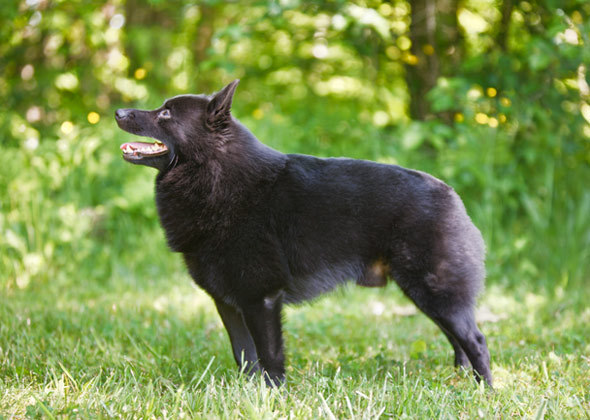
This “excellent and faithful” watchdog is the perfect size for many boats, where he will most likely be happy to serve as co-captain. The Schipperke hails from Belgium and although there are stories about him serving as a watchdog on canal boats, he was actually a type of miniature herding dog. That doesn’t mean he can’t adapt to life on the water, though. This fun-loving dog tends to be curious and alert, as well as agile enough to navigate a deck with ease. His abundant black double coat is easily kept with weekly brushing.
American Water Spaniel
Another “little brown dog,” the AWS is the state dog of Wisconsin, where he was developed primarily as a water retriever, but he’s plenty versatile. At 25 to 45 pounds, he’s suited to just about any size craft, from a kayak to a mega-yacht. True to his name, he usually loves any activity that involves getting wet. Plan to comb and brush his curly brown coat two to three times a week and give him a thorough freshwater rinse if he goes for a dip.
Poodle
Did you know that Poodles started out as water dogs? The standards were originally bred in Germany to retrieve ducks from bodies of water, and that fancy trim with the poufs on the legs and chest supposedly originated as a way to keep the dog’s joints and body warm in the water. Any size Poodle can make a good boat dog, but the Miniature — larger than the Toy but smaller than the Standard — may be the most practical choice.
Miniature Schnauzer
While his origin is as a ratter on a farm, the lively Miniature Schnauzer has many qualities that can make him well-suited to the boating life. One, of course, is his portable size: At 11 to 20 pounds, he’s easy to lift on and off a boat, but he’s not so small that he is likely to be easily injured. And his ratting ability transfers nicely to docks and boats; your craft will be vermin-free with him on the job. Miniature Schnauzers are typically smart and affectionate with their humans, and an alert nature tends to make them good companions during the dog watch.
Newfoundland
He’s probably more suited to a yacht than a kayak, but the Newfie (as he’s known for short) is the quintessential water dog, with a history of rescuing people when they fell in the drink by swimming lifelines out to them. One of history’s most well-known Newfies was Lord Byron’s dog Boatswain, whom he eulogized as having “all the Virtues of Man without his Vices.” A Newfoundland named Seaman accompanied explorers Lewis and Clark as they mapped the vast Louisiana Purchase. A flat, water-resistant double coat and webbed feet complete his qualifications to be your matey.
But even dogs who tend to love the water can benefit from some water-safety strategies, starting with a life vest. Never leave any dog in the water unsupervised and if he's lounging on deck in the sun, watch for signs of overheating. Provide plenty of fresh drinking water to reduce the chance of your dog lapping up water from stagnant ponds or swallowing too much salt water.
Here’s eight dogs who can be classic first mates and bosun buddies.
Dog Breeds Who May Take Well to Boating
The Lab is first in the hearts of his countrymen — he’s been ranked most popular dog by the AKC for a dog’s age — and not just for his classic good looks. He’s typically an all-around athlete and water dog par excellence. It’s not unusual to see a Lab standing on the bow of a yacht or motorboat, keeping a weather eye out for birds and dolphins or leaping off to go for a dog paddle. His webbed toes, rudder-like otter tail and waterproof coat often make him a top boat dog.
This dog with the funny name was born to be on the water. The state dog of South Carolina, he was bred to hunt from small boats in swamps, taking up less room than larger retrievers. The Boykin has a curly coat that is liver, brown or dark-chocolate in color, the genesis of his nickname “little brown dog.” He’s also known as “the little dog who doesn’t rock the boat.”
When you’re looking for a boat dog, it’s hard to go wrong with one with “water” in his name. The Portie, as he’s nicknamed, used to go out with fishermen and help retrieve their nets filled with fish. Not surprisingly, he typically loves to play in water and is a popular sailing companion in any port. Porties have a wavy or curly coat that doesn’t shed much but must be brushed two to three times a week and trimmed regularly.
This “excellent and faithful” watchdog is the perfect size for many boats, where he will most likely be happy to serve as co-captain. The Schipperke hails from Belgium and although there are stories about him serving as a watchdog on canal boats, he was actually a type of miniature herding dog. That doesn’t mean he can’t adapt to life on the water, though. This fun-loving dog tends to be curious and alert, as well as agile enough to navigate a deck with ease. His abundant black double coat is easily kept with weekly brushing.
Another “little brown dog,” the AWS is the state dog of Wisconsin, where he was developed primarily as a water retriever, but he’s plenty versatile. At 25 to 45 pounds, he’s suited to just about any size craft, from a kayak to a mega-yacht. True to his name, he usually loves any activity that involves getting wet. Plan to comb and brush his curly brown coat two to three times a week and give him a thorough freshwater rinse if he goes for a dip.
Did you know that Poodles started out as water dogs? The standards were originally bred in Germany to retrieve ducks from bodies of water, and that fancy trim with the poufs on the legs and chest supposedly originated as a way to keep the dog’s joints and body warm in the water. Any size Poodle can make a good boat dog, but the Miniature — larger than the Toy but smaller than the Standard — may be the most practical choice.
While his origin is as a ratter on a farm, the lively Miniature Schnauzer has many qualities that can make him well-suited to the boating life. One, of course, is his portable size: At 11 to 20 pounds, he’s easy to lift on and off a boat, but he’s not so small that he is likely to be easily injured. And his ratting ability transfers nicely to docks and boats; your craft will be vermin-free with him on the job. Miniature Schnauzers are typically smart and affectionate with their humans, and an alert nature tends to make them good companions during the dog watch.
Newfoundland
He’s probably more suited to a yacht than a kayak, but the Newfie (as he’s known for short) is the quintessential water dog, with a history of rescuing people when they fell in the drink by swimming lifelines out to them. One of history’s most well-known Newfies was Lord Byron’s dog Boatswain, whom he eulogized as having “all the Virtues of Man without his Vices.” A Newfoundland named Seaman accompanied explorers Lewis and Clark as they mapped the vast Louisiana Purchase. A flat, water-resistant double coat and webbed feet complete his qualifications to be your matey.
Subscribe to:
Posts (Atom)